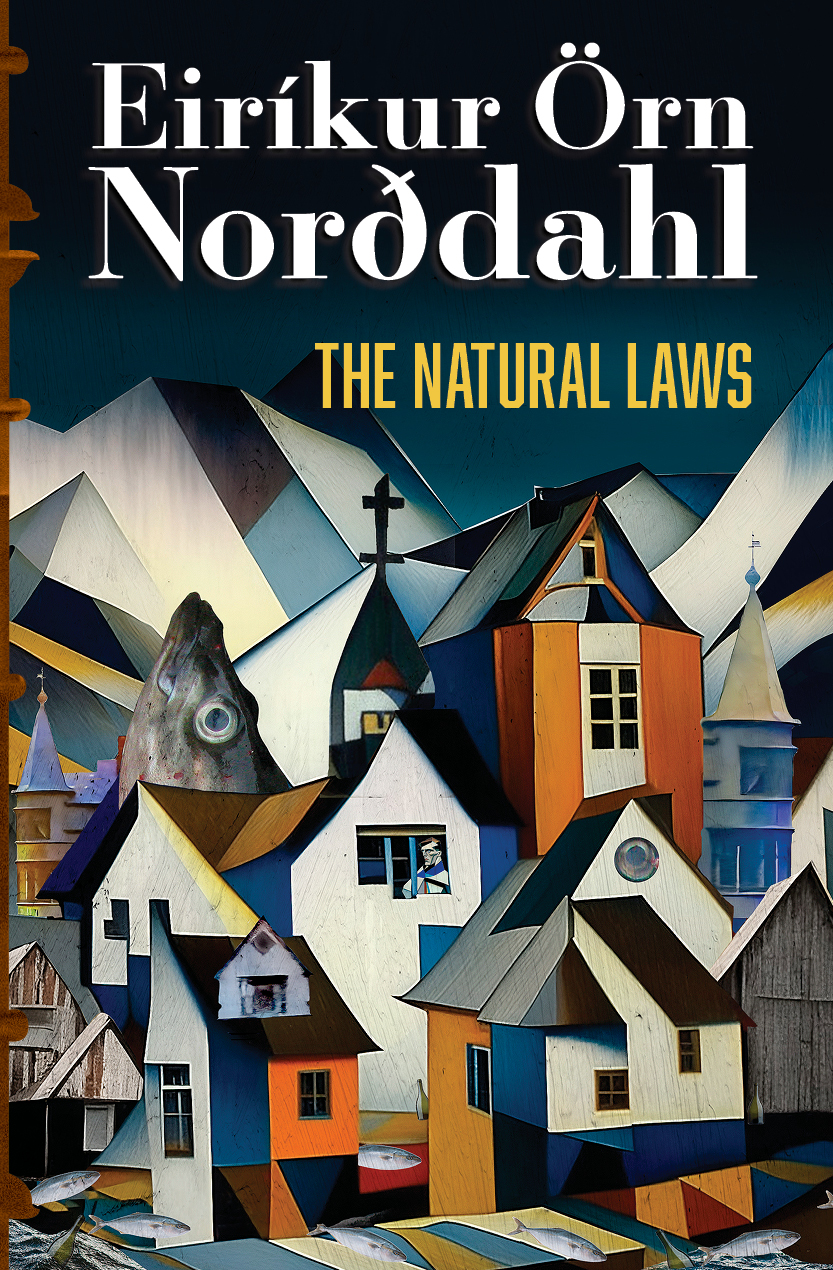
The Natural Laws
When hundreds of priests gathered in the tiny Icelandic town of Ísafjörður in 1925, things did not go as planned. Jón, the youngest and most beautiful bishop in Iceland’s history, had intended to disprove the country’s growing spiritualism. Instead, a mountain collapsed, god appeared (in all too small clothes), water turned to wine, fish grew as large as men, and, did everyone just strike deals with the devil?
The charm of this book is how the author combines (supposedly) real historical records like old newspapers, diaries, letters, and interviews, but also gives himself freedom to fill in some gaps (with quite some imagination). This leades to a fantastical historical fiction where the line between reality and fantasy is blurred.
The story takes place over a single week, and we get to follow many characters in the town, but with Jón as the centerpiece. While the setting is quite fantastical, a lot of the focus is on everyday interactions between people, and on themes such as love, grief, and faith. The writing captures meetings between people in a great way, which is one of my favorite parts of the book.
One of the clear strengths of the book is the blend of reality and fiction. However, this was also one of the parts I struggled a bit with while reading the book. I was a bit unsure if I should read it as a historical fiction with an unreliable narrator, where I would try to see through the fantastical aspects, or if I should just immerse myself in the fantasy.